
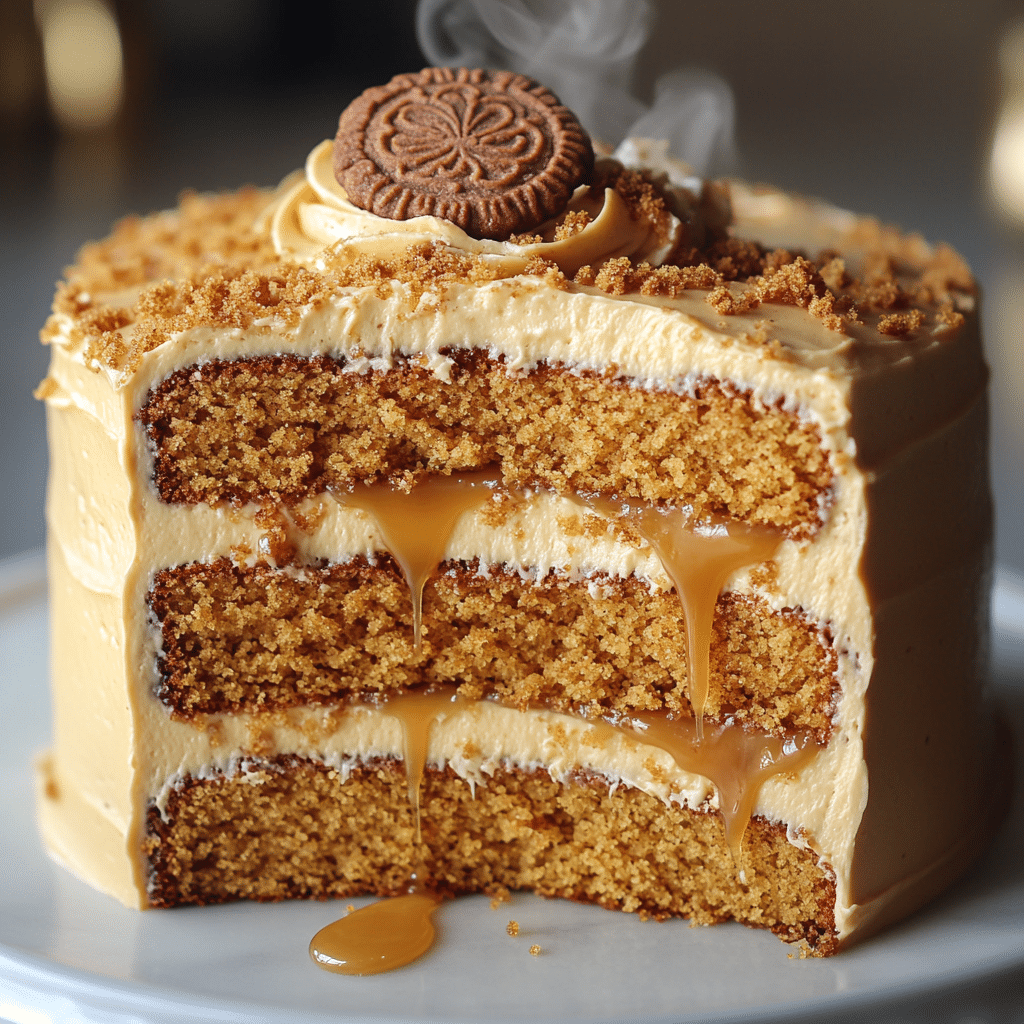
Everyone loves a dessert that looks impressive but comes together with surprising ease, and this Easy Biscoff Cake fits that description perfectly. If you have ever tasted the deep, caramelized flavor of Lotus Biscoff cookies, you understand why this ingredient has taken the baking world by storm. This cake captures all that warm, spiced goodness in a fluffy, moist sponge that pairs beautifully with a creamy cookie butter frosting. Whether you need a showstopper for a birthday party or a comforting treat for a weekend family gathering, this recipe delivers bakery-quality results right from your home kitchen.
The magic lies in incorporating the cookie spread directly into the batter, ensuring every bite is infused with that signature speculoos flavor. It is rich without being overly heavy, and the texture strikes the ideal balance between dense and airy. You do not need professional decorating skills to make this look amazing; a simple swirl of frosting and some crushed cookies on top create a rustic, elegant finish. Get ready to fill your kitchen with the irresistible aroma of brown sugar, cinnamon, and butter as you bake this crowd-pleasing masterpiece.
Why You’ll Love This Easy Biscoff Cake
Perfect for Celebrations
This cake shines as a centerpiece for any festive occasion. The warm tones of the sponge and the creamy frosting make it particularly suitable for autumn and winter holidays, yet it remains light enough for spring birthdays. Guests often ask for the “secret ingredient” because the flavor profile is distinctively different from a standard vanilla or chocolate cake. It transports well, making it an excellent choice for potlucks or dinner parties where you want to bring something unique that appeals to both adults and children.
Biscoff Flavor Highlights
Lotus Biscoff spread serves as the star here, providing a depth of flavor that ordinary sugar cannot achieve alone. The spread contains caramelized biscuits, vegetable oils, and sugar, which essentially seasons your cake batter from the inside out.1 When you pair the Biscoff-infused sponge with a buttercream that also features the spread, you get a double dose of deliciousness. The crushed cookies added for decoration introduce a necessary textural contrast, giving you a satisfying crunch against the soft crumb of the cake.
Easy Biscoff Cake

Equipment
- two 8 inch cake pans
- electric mixer
- mixing bowls
Ingredients
- 2 1/4 cups All-purpose flour
- 2 1/2 tsp Baking powder
- 1/2 tsp Salt
- 3/4 cup Unsalted butter, softened
- 1/2 cup Biscoff spread (creamy)
- 1 cup Granulated sugar
- 1/2 cup Light brown sugar, packed
- 3 Large eggs, room temperature
- 1 tsp Vanilla extract
- 1 cup Whole milk or buttermilk, room temperature
- 1 cup Unsalted butter (for frosting)
- 1/2 cup Biscoff spread (for frosting)
- 3 cups Powdered sugar
- 2 tbsp Heavy cream or milk
Instructions
- Preheat oven to 350°F (175°C). Grease and flour two 8-inch round cake pans.
- Whisk flour, baking powder, and salt in a medium bowl.
- Beat butter, Biscoff spread, and sugars until light and fluffy (about 3-4 mins). Add eggs one at a time, then vanilla.
- Alternate adding flour mixture and milk to the butter mixture, starting and ending with flour. Mix just until combined.
- Divide batter into pans. Bake 25-30 mins until a toothpick comes out clean. Cool completely.
- Beat butter and Biscoff spread for frosting. Gradually add powdered sugar and cream until fluffy. Frost the cooled cakes.
Notes
Nutrition
Ingredient Highlights & Substitutions
Essential Ingredients
To achieve the best texture, use room temperature unsalted butter for both the cake batter and the frosting. This allows the butter to emulsify properly with the sugar and eggs, creating a smooth, airy structure. You will also need a jar of creamy Biscoff spread (cookie butter); avoid the crunchy version for the batter to ensure smoothness, though crunchy works fine for toppings. Brown sugar is crucial in this recipe because its molasses content enhances the caramel notes of the cookie butter, while sour cream or buttermilk ensures the crumb stays moist for days.
Smart Substitutions
If you cannot find specific cookie butter, Trader Joe’s Speculoos Cookie Butter is a fantastic alternative that tastes nearly identical. For those who prefer a lighter cake, you can substitute half of the butter with oil, though you might lose some of that rich mouthfeel. If sour cream is not in your fridge, full-fat plain Greek yogurt works as a perfect seamless swap, providing the same acidity and moisture. Gluten-free baking flour blends can replace all-purpose flour if you need to accommodate dietary restrictions, just ensure the blend contains xanthan gum.
Step-by-Step Instructions
Prep Phase
Start by preheating your oven to 350°F (175°C) to ensure it reaches the correct temperature before your batter is ready. Grease two 8-inch round cake pans generously with butter and line the bottoms with parchment paper. This step is non-negotiable if you want your cakes to release perfectly without sticking. In a medium bowl, whisk together your flour, baking powder, baking soda, and salt. Sifting these dry ingredients helps break up clumps and aerates the flour, leading to a lighter final product.2
Cooking Phase
In a large mixing bowl, beat the butter, oil, and sugars together until the mixture looks pale and fluffy, which usually takes about 3 to 4 minutes. Add the eggs one at a time, followed by the vanilla extract and the Biscoff spread, mixing until fully incorporated. Alternate adding the dry ingredients and the sour cream to the wet mixture, starting and ending with the dry ingredients. Avoid overmixing at this stage; stop as soon as the flour streaks disappear. Divide the batter evenly between the prepared pans and bake for 25-30 minutes, or until a toothpick inserted into the center comes out clean.
Pro Tips for Perfect Results
Technique Secrets
The most critical secret to a fluffy Biscoff cake is creaming the butter and sugar adequately. Many home bakers rush this step, but taking the full four minutes incorporates air bubbles that expand during baking. Additionally, make sure all your refrigerated ingredients—eggs, sour cream, and butter—are truly at room temperature. Cold ingredients can cause the batter to curdle, resulting in a dense or unevenly baked cake. When making the frosting, beat the butter alone for five minutes before adding sugar; this creates a white, silky base that makes the frosting less gritty.
Common Mistakes to Avoid
A common pitfall is overbaking the cake, which dries out the crumb and dulls the Biscoff flavor. Check your cakes five minutes before the recipe states; ovens vary significantly in temperature accuracy. Another mistake is frosting the cake before it has cooled completely. Even a slightly warm cake will melt the butter in the frosting, causing your beautiful layers to slide apart. If you notice the frosting becoming too soft while piping, pop the piping bag in the refrigerator for ten minutes to firm it up.
Serving Ideas & Pairings
Presentation & Plating
For a professional look, level the tops of your cake layers with a serrated knife before stacking. Place the first layer on a cake stand, spread a thick layer of frosting, and drizzle some warmed Biscoff spread over it before adding the second layer. Cover the entire cake in a semi-naked style or a full coat of frosting. To finish, press crushed Biscoff cookies around the bottom edge and place whole cookies vertically on top. A drizzle of melted cookie butter down the sides creates a stunning drip cake effect that looks incredible in photos.
Pairing Suggestions
This cake pairs exceptionally well with hot beverages that balance its sweetness. Serve a slice alongside a strong cup of dark roast coffee or an espresso to cut through the richness of the buttercream. For an evening treat, a glass of cold milk or a scoop of vanilla bean ice cream complements the spices perfectly. If you are serving this at a fall gathering, warm apple cider or a chai tea latte echoes the cinnamon and nutmeg notes found in the cookies, creating a cozy and cohesive flavor experience.
Easy Birthday Cake with Bows Decorating Tutorial
Timing Breakdown
| Step | Time | Notes |
| Prep | 20 min | Includes bringing ingredients to room temp |
| Cook | 30 min | Bake time varies by oven |
| Cool | 60 min | Essential before frosting |
| Decorate | 20 min | Frosting and dripping |
| Total | 2 hr 10 min | Plan accordingly |
Frequently Asked Questions
Can I make this cake ahead of time?
Yes, you can bake the cake layers up to two days in advance. Wrap them tightly in plastic wrap once they are completely cool and store them at room temperature. You can also freeze the wrapped layers for up to three months; just thaw them in the fridge before decorating.
What if I don’t have Biscoff spread?
While Biscoff is the key flavor, you can use other cookie butters found at grocery stores.3 Peanut butter or Nutella will change the flavor profile entirely to peanut or chocolate hazelnut, which works with this base recipe but won’t result in a Biscoff cake.
Why did my cake sink in the middle?
Sinking usually happens if the oven door was opened too early during baking, causing a sudden temperature drop. It can also occur if there was too much leavening (baking powder) or if the batter was over-mixed, weakening the structure.
Conclusion
This Easy Biscoff Cake recipe offers a delightful departure from standard chocolate and vanilla options, bringing a warm, caramelized sophistication to your dessert table. The combination of moist sponge and creamy, cookie-infused frosting guarantees that every bite is satisfyingly sweet and flavorful. By following the tips on temperature and mixing, you ensure a bakery-quality result that will impress friends and family alike. Whether for a special birthday or a simple weekend indulgence, this cake is sure to become a requested favorite in your household.